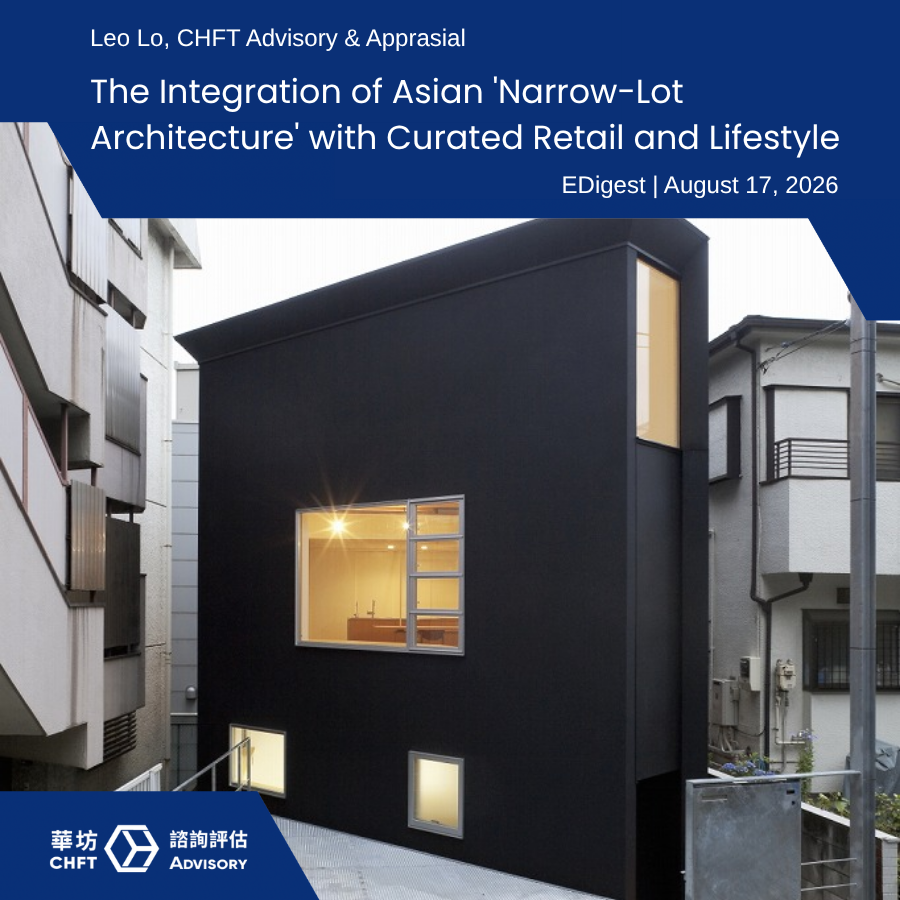
In the trendy Omotesando district of Tokyo, Thao Dien in Ho Chi Minh City, or the winding alleyways of Hongdae in Seoul, a remarkably slender architectural form—looking almost squeezed between its neighbors—is silently defining the commercial landscape of Asian cities.In Japan, they are known as “Pencil Buildings”; in Vietnam, the historic “Tube Houses” (Nhà ống); in South Korea, “Kkoma Buildings” (mini buildings); and in Singapore and Malaysia, the heritage “Shophouses” that have become highly sought-after by investors in recent years. In this article, we collectively refer to them as narrow-lot buildings.
Despite their narrow footprints, these structures possess remarkable vertical tension. They serve not only as value-retaining assets for investors, but also as the ultimate stage for retail brands to express their unique identity. To fully understand the commercial value of narrow-lot buildings, one must first deconstruct the evolutionary logic behind them across different cultural contexts.
Full article published in EDigest, written by Leo Lo of CHFT Advisory and Appraisal.